Prefabricated Construction Fails Without BIM: 7 Costly Reasons
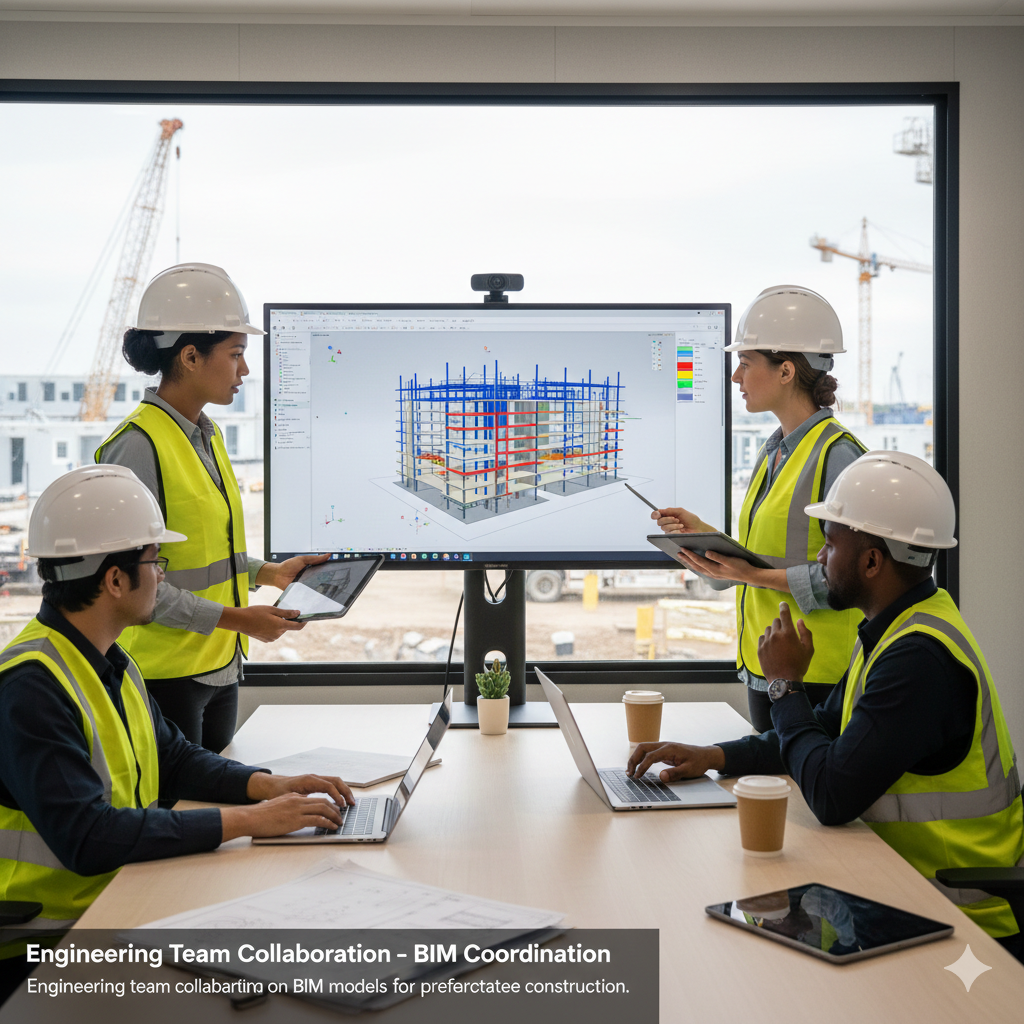
Prefabricated Construction BIM: 7 Costly Failures
Prefabricated Construction BIM plays a critical role in modern engineering projects. When coordination is missing, prefabrication can lead to delays, design clashes, and rising costs.
Many construction companies adopt prefabrication to improve speed. However, without proper BIM integration, the expected efficiency often turns into rework and confusion.
At Enclave Technology Services, we help clients implement structured digital coordination so prefabrication delivers real results instead of costly surprises.
Let’s understand where things go wrong.
Why Coordination Matters in Prefabrication
Prefabrication depends on precision. Every beam, duct, and pipe must align correctly before reaching the site.
Without coordinated modeling, different teams work on separate drawings. As a result, conflicts remain hidden until installation begins. Consequently, modifications become necessary and timelines shift.
This is where Prefabricated Construction BIM creates measurable value.
1. Design Clashes Discovered Too Late
Structural and MEP systems often intersect in complex buildings. If clashes are not detected early, fabricated elements may not fit during assembly.
Early model coordination allows teams to resolve these issues virtually. Therefore, site disruptions are reduced significantly.
2. Fabricated Components Do Not Fit
Prefabrication requires millimeter-level accuracy. Even minor errors affect installation.
When models are not aligned, components arrive on-site with dimensional conflicts. As a result, crews must adjust or refabricate parts, increasing costs.
Accurate BIM workflows prevent these errors before production begins.
3. Communication Gaps Between Teams
Large projects involve architects, engineers, and contractors. Without a shared digital environment, information often becomes fragmented.
Prefabricated Construction BIM improves transparency. It ensures every discipline works from the same coordinated model.
4. Installation Sequencing Problems
Installation order is critical in prefabrication. If sequencing is not planned digitally, site teams face confusion.
However, coordinated 3D simulations allow better planning. This improves labor productivity and equipment management.
5. Rising Rework Costs
Rework directly impacts profitability. Redesign, material waste, and extended labor increase expenses quickly.
By resolving issues during the modeling stage, companies protect their budgets and margins.
6. Delayed Project Timelines
Time savings drive prefabrication decisions. Yet poor coordination often creates the opposite effect.
With Prefabricated Construction BIM, teams identify risks early and maintain predictable schedules.
7. Reduced Client Confidence
Missed deadlines and cost overruns weaken trust. Clients expect transparency and reliability.
Digitally coordinated workflows improve accountability and strengthen long-term relationships.g and reliable delivery.
How Enclave Technology Services Supports Prefabrication Projects
Enclave Technology Services delivers integrated engineering and digital modeling solutions, including:
- BIM coordination
- Clash detection
- Structural CAD modeling
- MEP integration
- VDC simulation
- Fabrication-ready shop drawings
Our approach ensures issues are solved before fabrication begins. As a result, projects move forward smoothly and efficiently.
Why Choose Enclave Technology Services
✔ Experienced BIM engineers
✔ Advanced digital coordination
✔ Reduced delays and rework
✔ Accurate fabrication support
✔ Global collaboration capabilities
We transform complex prefabrication challenges into controlled, predictable workflows.
FAQ
What is Prefabricated Construction BIM?
It is the integration of prefabrication workflows with coordinated BIM modeling to ensure accuracy before fabrication.
Does Prefabricated Construction BIM reduce delays?
Yes. It detects conflicts early and improves installation planning.
Is Prefabricated Construction BIM necessary for all projects?
It is highly recommended for any project involving prefabricated components.
Final Thoughts
Prefabricated Construction BIM is no longer optional in modern construction. Without it, projects face clashes, delays, and rising costs.
With the right coordination strategy, prefabrication becomes efficient, accurate, and profitable.
At Enclave Technology Services, we ensure problems are solved digitally before construction begins.https://www.yenclave.com/contact/