Engineering Waste Management Plants: How BIM and Digital Design Improve Project Coordination

Introduction
India’s growing focus on sustainable development has placed waste management infrastructure at the centre of urban planning and industrial expansion. From municipal solid waste and construction debris to industrial and organic waste, modern facilities are being developed to process waste more efficiently while supporting environmental goals.
But building a successful waste management plant involves much more than installing shredders, trommels or conveyor systems. Behind every well-functioning facility is a carefully engineered infrastructure where multiple disciplines must work together from the very beginning.
Structural systems need to support heavy equipment. Mechanical layouts must allow smooth material movement. Utility networks require careful routing. Access roads, maintenance spaces and safety requirements all compete for the same physical area.
When these elements are designed in isolation, coordination challenges often appear during construction. This is why engineering and digital design have become essential to modern waste management projects.
By using Building Information Modelling (BIM), CAD and Virtual Design and Construction (VDC), engineering teams can coordinate different systems before construction begins, helping projects move forward with greater confidence and fewer surprises on site.
Waste Management Plants Are Becoming More Complex
Today’s waste management plants are designed to handle increasing waste volumes while meeting stricter environmental regulations and operational requirements.
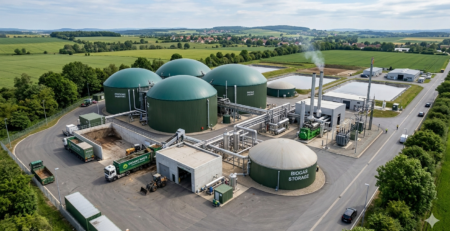
A typical facility may include waste receiving areas, segregation zones, shredders, rotary trommels, conveyors, composting units, material recovery systems, utility corridors, electrical rooms, control buildings and supporting infrastructure.
Each system performs a different function, yet every component must fit together within a limited site.
For engineering teams, the challenge is not simply designing individual systems. The real challenge is ensuring that every structural, mechanical, electrical and utility element works together without creating conflicts during construction or operation.
Why Good Designs Can Still Create Problems
One of the biggest misconceptions in industrial infrastructure projects is that accurate drawings automatically lead to successful execution.
In reality, every engineering discipline may complete its work correctly, but problems can still arise when those designs are combined.
A conveyor may interfere with a structural beam.
Maintenance access may be blocked by nearby equipment.
Utility lines may overlap with steel members.
Cable trays may compete for the same space as mechanical services.
These issues are rarely caused by poor engineering. They are often the result of limited coordination between disciplines during the design stage.
Discovering these conflicts during construction can lead to redesign, fabrication changes, installation delays and additional project costs.
For a waste management plant, where multiple systems operate within the same facility, early coordination becomes an important part of successful project delivery.
Engineering Beyond Equipment Selection
When discussing waste management projects, conversations often focus on processing technology such as shredders, sorting systems or composting equipment.
However, machinery alone does not create an efficient plant.
Every piece of equipment requires properly engineered foundations, structural support, utility connections, safe operating clearances and sufficient maintenance access. Material flow must also be considered to ensure smooth movement throughout the facility.
This requires collaboration between multiple engineering disciplines from the earliest stages of the project.
A coordinated engineering approach helps ensure that equipment selection aligns with the overall infrastructure design rather than creating constraints later during construction.
How BIM Improves Waste Management Plant Design
Building Information Modelling has transformed the way engineering teams approach complex infrastructure projects.
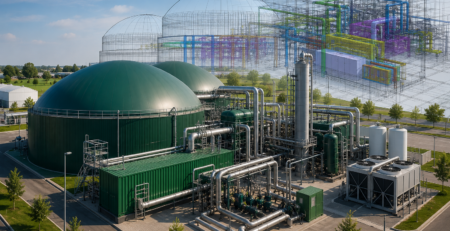
Instead of reviewing individual drawings separately, BIM allows different engineering disciplines to work within a coordinated digital model that represents the complete facility.
For waste management plants, this creates a clearer understanding of how structural components, equipment layouts, utilities, piping and electrical systems interact throughout the project.
Rather than waiting until construction to identify conflicts, project teams can review potential issues during the design phase when changes are easier and more cost-effective to implement.
This coordinated approach improves communication between stakeholders while supporting better engineering decisions throughout the project lifecycle.
The Value of Early Clash Detection
One of the most practical advantages of BIM is clash detection.
As structural, mechanical, electrical and utility models are integrated, the software helps identify physical conflicts before work reaches the construction site.
For example, engineers can quickly determine if:
- Conveyor systems interfere with structural members
- Utility pipelines conflict with equipment foundations
- Maintenance platforms restrict access to machinery
- Electrical systems overlap with mechanical installations
- Structural elements limit installation space
Resolving these issues digitally allows engineering teams to optimise layouts before fabrication and construction begin.
This reduces unnecessary rework while helping contractors execute projects with greater efficiency.
Better Coordination Across Engineering Teams
A waste management plant depends on continuous collaboration between different engineering disciplines.
Structural engineers need accurate equipment loading information.
Mechanical teams must coordinate with process layouts.
Electrical engineers require clear utility pathways.
Civil engineers need to integrate drainage, roads and site development into the overall facility design.
Without a coordinated workflow, each discipline risks making decisions that affect the work of another.
BIM creates a shared digital environment where engineering teams can review the project together, improving communication and reducing design conflicts before they reach the site.
This collaborative process supports more informed decision-making while helping deliver infrastructure that is practical, buildable and ready for long-term operation.
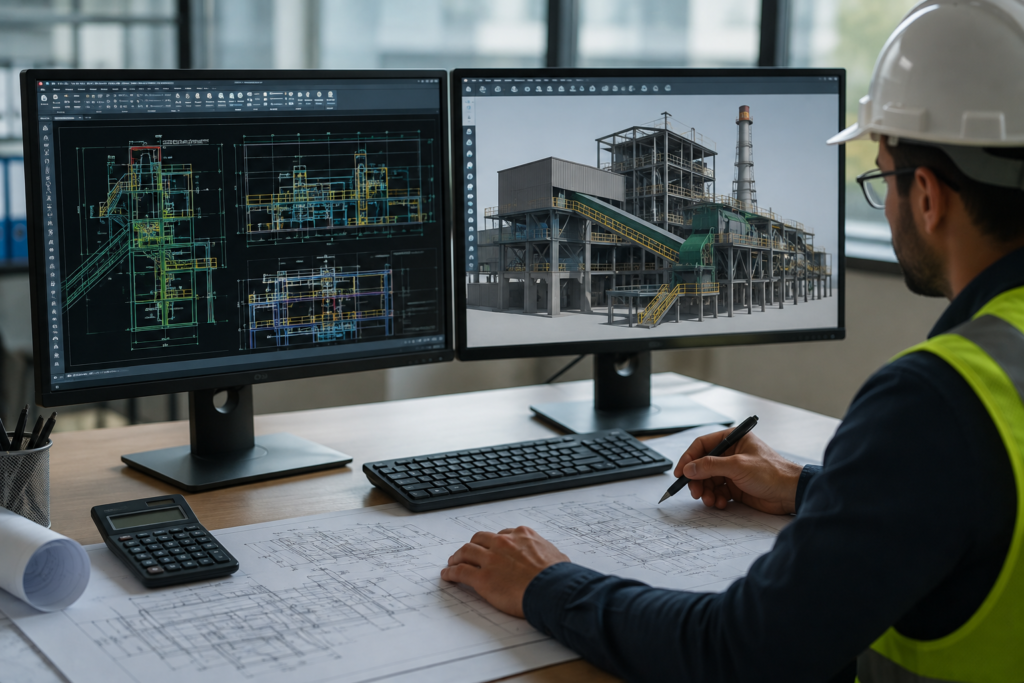
Digital Engineering Creates Better Project Visibility
Digital engineering goes beyond creating drawings. It helps project teams understand how the entire facility will function before construction begins.
With BIM and Virtual Design and Construction (VDC), engineers can review layouts, construction sequences and design coordination in a shared digital environment. This allows stakeholders to identify potential challenges early and make informed decisions with greater confidence.
For a waste management plant, better visibility means fewer surprises during execution and a smoother transition from design to construction.
The Role of CAD and Structural Engineering
Every waste management plant requires detailed engineering documentation that contractors can rely on during construction.
CAD supports the development of accurate engineering drawings, while structural engineering ensures that equipment foundations, steel structures, platforms and supporting systems are designed to meet project requirements.
When combined with BIM, these services help create engineering information that is coordinated, practical and ready for execution.
Supporting EPC Contractors and Project Owners
Waste management projects often involve multiple stakeholders, including consultants, EPC contractors, equipment suppliers and project owners.
A coordinated engineering process helps every team work from the same project information, reducing misunderstandings and improving communication.
This approach can support:
- Better design coordination
- Improved construction planning
- Reduced design revisions
- More efficient project execution
- Better collaboration across disciplines
For large infrastructure projects, these improvements contribute to better project delivery and long-term operational efficiency.
Engineering Support During Construction
Construction rarely follows the original design without changes. Equipment specifications may be updated, site conditions can differ from initial assumptions and installation requirements may evolve during execution.
Engineering support during construction helps project teams respond to these changes without affecting the overall coordination of the project.
Updated drawings, revised models and technical coordination ensure that changes are managed efficiently while maintaining design accuracy.
This level of engineering support helps minimise disruptions and keeps projects moving forward.
Why Early Coordination Makes a Difference
Many construction challenges can be avoided long before work begins on site.
Reviewing structural, mechanical, electrical and utility systems together allows engineers to identify conflicts while changes are still simple to implement.
Instead of solving problems during installation, project teams can resolve them during the design stage, where the impact on cost and schedule is significantly lower.
For waste management plants, this proactive approach creates a more organised and efficient project environment.
How Enclave Technology Services Supports Waste Management Projects
Modern waste management facilities require engineering solutions that bring multiple disciplines together.
Enclave Technology Services supports industrial and infrastructure projects through BIM, CAD, VDC, structural engineering, detailing and multidisciplinary coordination.
By helping project teams visualise, coordinate and validate engineering information before construction, Enclave contributes to improved collaboration, reduced design conflicts and more efficient project execution.
Whether developing a new waste management plant or expanding an existing facility, coordinated engineering helps create infrastructure that is practical, buildable and prepared for long-term operation.
Conclusion
A successful waste management plant is built on more than advanced processing equipment. It depends on well-coordinated engineering that brings every structural, mechanical, electrical and utility system together before construction begins.
By combining BIM, CAD, VDC and engineering expertise, project teams can improve coordination, reduce design conflicts and support more efficient project delivery.
As waste management infrastructure continues to evolve, digital engineering will remain an important part of building facilities that are smarter, more reliable and ready for future demands.
Build Smarter Waste Management Infrastructure with Enclave Technology Services
Planning a waste management plant or industrial infrastructure project?
Enclave Technology Services provides BIM, CAD, VDC, structural engineering and multidisciplinary coordination services that help transform complex engineering requirements into coordinated project outcomes.
Connect with Enclave Technology Services to discuss how our engineering expertise can support your next infrastructure project from design through execution.