Is Your BIM Model Construction-Ready? 5 Checks That Actually Matter
Table of Contents
- Why a Detailed BIM Model Can Still Have Problems
- 5 Checks Before You Move a BIM Model Forward
- Why BIM Coordination Matters
- How Enclave Technology Services Can Support Your Project
- Our BIM Services
- How We Work
- Frequently Asked Questions
- Is Your BIM Model Ready?
- Conclusion
Why a Detailed BIM Model Can Still Have Problems
A BIM model can look great on screen and still cause problems later.
The walls are there.
The structure is modelled.
The MEP systems are in place.
But when the project team starts using the model, questions appear.
Are the models aligned correctly?
Is everyone working from the latest revision?
Can the drawings actually be produced from the model?
Will the services fit once construction starts?
This is where the difference between a detailed BIM model and a useful BIM model becomes clear.
For AEC firms, BIM isn’t just about modelling more elements. The model needs to support coordination, documentation, decision-making, and eventually construction.
Before a model moves to the next stage, a few simple checks can tell you a lot about its quality.
5 Checks Before You Move a BIM Model Forward
1. Can Another Team Understand the Model?
The person who created the model should not be the only person who knows how it works.
Views, levels, grids, links, families, worksets, naming and file organisation should be clear enough for another team member or consultant to navigate without starting from scratch.
This becomes especially important when models are shared between consultants or external BIM teams.
A well-structured model saves time every time someone opens it.
2. Are the Coordinates and Levels Right?
A small coordination error here can cause a surprisingly large problem later.
If architectural, structural and MEP models are not using the same coordinates or levels, the federated model may appear misaligned.
That can lead to incorrect clash results and unnecessary rework.
Before starting detailed BIM coordination, check that:
- Shared coordinates are consistent
- Levels and grids line up
- Linked models are positioned correctly
- The agreed project setup is being followed
These are basic checks, but they are much easier to fix early.
3. Does the Model Contain the Right Information?
A BIM model is more than geometry.
The information attached to the elements should match what the project actually needs.
For example, a model created for early design does not need the same level of detail and information as one being used for detailed coordination or construction documentation.
So the question shouldn’t be:
“How much information can we put into the model?”
It should be:
“What information will the project team actually use?”
That keeps the model useful without making it unnecessarily complicated.
4. Does It Coordinate With Other Disciplines?
This is where BIM coordination really gets tested.
Your structural model may be correct.
Your MEP model may be correct.
Your architectural model may also be correct.
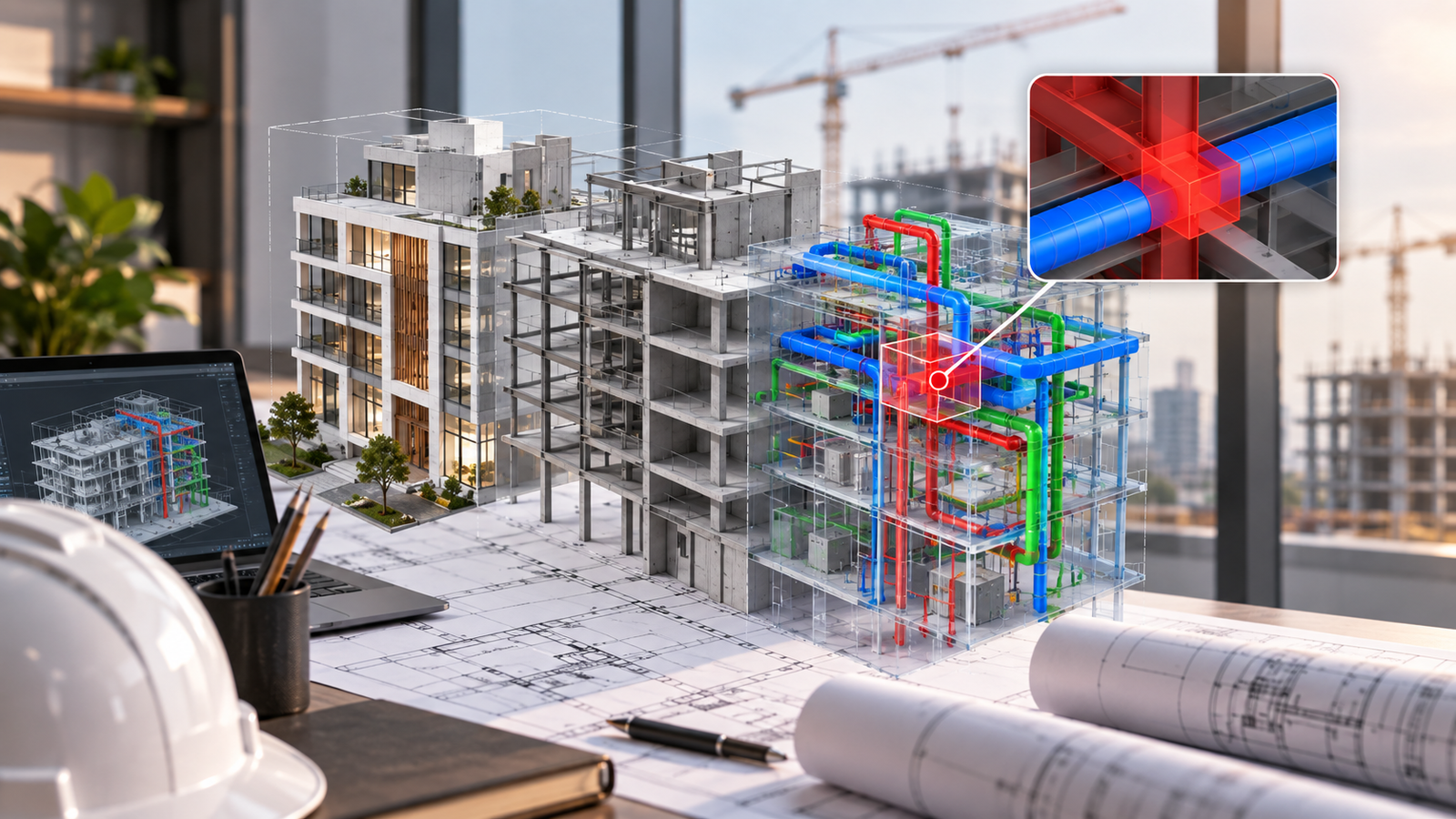
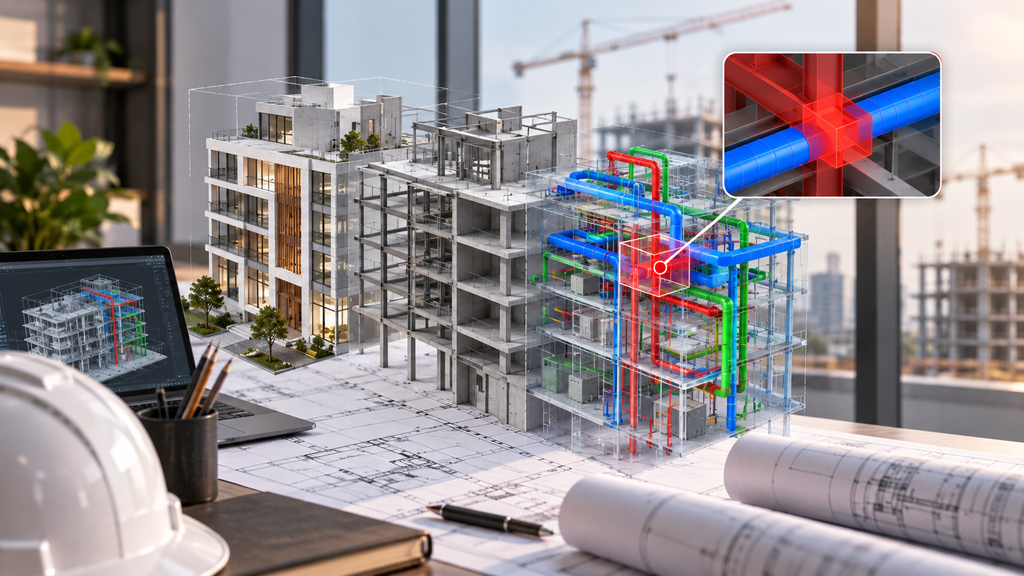
But when they come together, a duct might run through a beam or a pipe might leave no room for maintenance.
This is why multidisciplinary coordination matters.
A federated model allows teams to look at the project as a whole and identify conflicts before they become site issues.
And this is where BIM clash detection becomes useful.
Finding a clash is only the beginning. The real work is deciding what should change and then checking whether the solution works.
5. Can the Model Support the Required Deliverables?
This is the check that often gets overlooked.
A BIM model may be technically detailed, but can it support the drawings, schedules, details or other outputs the project requires?
Depending on the project, the model may support:
- Construction drawings
- Structural details
- Quantity information
- Coordination reviews
- Shop drawing development
- Project documentation
The answer depends on the project scope, but the principle is simple.
The model should make the next stage easier, not create more work.
Why BIM Coordination Matters
Many BIM problems aren’t caused by poor modelling.
They happen because the project keeps changing.
A piece of equipment moves.
An opening changes.
A pipe route is revised.
A consultant issues a new drawing.
Suddenly, a model that was coordinated last week needs another review.
That is why coordination should be treated as an ongoing process rather than a final checkpoint.
Good BIM services help project teams keep track of changes, review interfaces between disciplines, and catch issues before they become difficult to resolve on site.
The aim isn’t to create a clash-free report just for the sake of it.
The aim is to make the project easier to build.
Why Choose Enclave Technology Services?
At Enclave Technology Services, we work on the digital engineering side of AEC and infrastructure projects.
Our services cover BIM modelling services, BIM coordination, structural BIM, clash detection, CAD, structural detailing, and VDC services.
We understand that every project has different standards, deliverables and coordination requirements.
So our focus is not simply on producing a detailed model.
It is on creating information that can be understood, coordinated and used by the wider project team.
Our BIM Services
BIM Modelling Services
Developing project-specific models based on scope, standards and required deliverables.
BIM Coordination
Coordinating information across architecture, structure and MEP disciplines.
BIM Clash Detection
Finding potential conflicts and supporting the coordination process around their resolution.
Structural BIM
Supporting structural modelling and detailing workflows.
CAD Services
Creating and updating accurate technical drawings and documentation.
VDC Services
Connecting digital design information with construction planning and project delivery.
How We Work
We start by understanding the project, not just the model.
The scope, standards, existing information, LOD requirements and final deliverables are reviewed first.
From there, we establish the appropriate BIM or engineering workflow.
As the work progresses, models and drawings are reviewed for accuracy and coordination. Revisions are tracked so that changes don’t quietly create new problems elsewhere.
Before delivery, the output is checked against the agreed project requirements.
Our approach is straightforward:
Understand. Coordinate. Review. Deliver.
Frequently Asked Questions
What is a construction-ready BIM model?
A construction-ready BIM model is one that has been developed to the required level, coordinated with relevant disciplines, and structured to support the project’s agreed construction deliverables.
Does more detail mean a better BIM model?
Not always. The model should contain the right geometry and information for its intended use.
Why is BIM coordination important?
It helps teams identify conflicts and understand how different systems interact before construction begins.
What is BIM clash detection?
It is the process of identifying potential conflicts between different model elements, such as structural components, piping, ducts, equipment and other services.
What is structural BIM?
Structural BIM involves creating and managing digital structural information as part of the wider BIM workflow.
Can BIM support construction documentation?
Yes. Depending on the project scope and model development, BIM can support drawings, details, schedules and other construction documentation.
Is Your BIM Model Ready?
Before approving a model, ask five simple questions:
Is it organised?
Are the coordinates correct?
Does it contain the right information?
Does it coordinate with other disciplines?
Can it support the required deliverables?
If the answer is yes, you have more than a detailed model.
You have a model that is ready to support the project.
Planning better BIM coordination for your next project? Contact us to discuss how Enclave Technology Services can support your coordination and digital engineering requirements.
Conclusion
A good BIM model isn’t the one with the most elements.
It’s the one that works when the rest of the project starts using it.
When the information is organised, coordinated and practical, BIM becomes much more than a 3D representation. It becomes something the team can actually rely on during design and construction.
That is the real measure of a construction-ready BIM model.