What Is a Federated BIM Model and Why Is It Important?
Introduction
Construction projects involve many teams working on different parts of the same building. Architects focus on the design, structural engineers work on the building’s framework, and MEP teams plan the systems that keep the building functional.
The challenge is making sure all these elements work together.
This is where a Federated BIM Model becomes valuable.
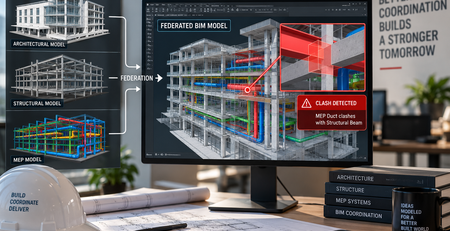
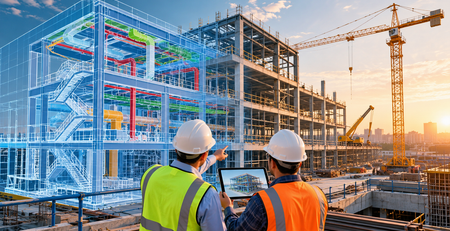
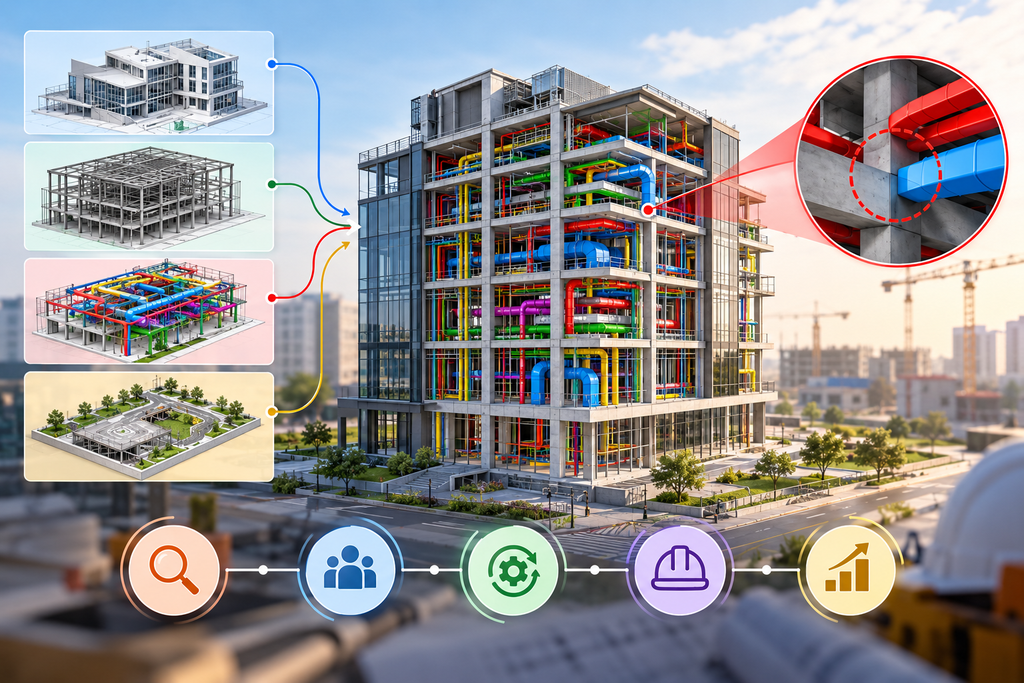
Instead of looking at architectural, structural, and MEP models separately, a federated model brings them together in a coordinated environment. It helps project teams see how different systems interact and identify potential issues before they reach the construction site.
In simple terms, it gives teams one coordinated view of multiple BIM models.
What Is a Federated BIM Model?
A Federated BIM Model is created by bringing separate discipline-specific BIM models together for coordination and review.
For example, a project may have an architectural model, structural model, mechanical model, electrical model, and plumbing model. These models are usually developed independently by different teams.
A federated BIM model allows these models to be viewed together without necessarily combining them into one single native model.
This is important because every discipline can continue managing its own model while the wider project team gets a clearer picture of the complete building.
The goal is simple: better coordination before construction begins.
Why Is Federated BIM Important?
A building may look perfectly coordinated when each discipline is reviewed separately. Problems often become visible only when those models are viewed together.
For example, an HVAC duct may need to pass through a space occupied by a structural beam. A pipe route may interfere with another service. Electrical cable trays may not have enough clearance.
These issues can become expensive when discovered on-site.
With BIM coordination, teams can identify such conflicts earlier, discuss possible solutions, and make changes before installation.
This can help reduce rework, improve communication, and make construction planning more predictable.
How Does Federated BIM Coordination Work?
The process is more straightforward than it may sound.
First, individual teams develop their discipline models based on the project requirements. These may include architectural, structural, MEP, and other models.
The models are then brought into a common coordination environment. The project team can review how the different elements interact and identify areas that need attention.
This is where BIM clash detection becomes important.
Potential conflicts are identified, reviewed with the relevant teams, and assigned for resolution. Once changes are made, the updated models can be reviewed again.
It becomes a continuous coordination process rather than a one-time model check.
Federated BIM and Clash Detection
One of the biggest advantages of a federated model is its ability to support clash detection.
Imagine an MEP duct passing through a structural beam. If this is discovered during construction, the team may have to stop work, revise the route, coordinate with other teams, and potentially make changes to already completed work.
When the same issue is identified within a federated BIM environment, it can be addressed digitally.
This doesn’t mean every construction problem can be eliminated. However, BIM clash detection gives project teams a better opportunity to find many coordination issues before they become site-level problems.
Benefits of a Federated BIM Model
The value of a federated BIM model goes beyond simply putting different models on the same screen.
Better Coordination
Architectural, structural, and MEP teams can review their work together and understand how their designs affect one another.
Fewer Construction Surprises
Potential conflicts can be identified earlier, giving teams more time to resolve them before construction.
Reduced Rework
Changes made during the digital coordination stage are generally easier to manage than changes made after installation.
Improved Constructability
A coordinated model helps teams assess whether systems can realistically fit, be installed, and be maintained within the available space.
Better Communication
A shared digital model gives different stakeholders a common visual reference when discussing project issues.
Together, these benefits make BIM coordination services an important part of modern digital construction workflows.
Federated BIM for MEP Coordination
MEP coordination is one of the areas where federated BIM can be particularly useful.
Mechanical, electrical, plumbing, and fire protection systems often need to share limited space. At the same time, these systems must coordinate with architectural finishes and structural elements.
Without proper coordination, even a small change in one system can affect another.
A federated model allows these systems to be reviewed together. Teams can examine service routes, ceiling spaces, shafts, plant rooms, equipment locations, and other critical areas before installation.
This makes MEP coordination services more structured and helps teams address conflicts earlier.
Federated BIM for Structural Coordination
Structural elements form the framework around which the rest of the building is designed and installed.
Columns, beams, slabs, walls, openings, and other structural components need to work alongside architectural and MEP systems.
A structural BIM model viewed within a federated environment can help identify potential conflicts between structural elements and building services.
For example, if an MEP route requires an opening or penetration through a structural element, the issue can be reviewed during coordination rather than discovered during installation.
This supports better communication between structural and building-services teams.
Federated BIM and VDC
Federated BIM also plays an important role in Virtual Design and Construction (VDC).
VDC uses digital models and collaborative processes to improve the planning and delivery of construction projects.
A federated BIM model can support VDC by providing a coordinated digital view of the project. Teams can use this information for design reviews, clash detection, constructability checks, and construction planning.
The focus is not simply on creating a detailed 3D model.
The real value comes from using that information to make better decisions before work reaches the site.
Federated BIM vs Integrated BIM
Federated BIM and integrated BIM are sometimes confused because both approaches focus on bringing project information together.
In a federated approach, individual discipline models remain separate but are brought together for coordination and review.
An integrated approach may involve a greater level of integration between information, workflows, or systems.
The right approach depends on the project, software environment, team structure, and information requirements.
For many multidisciplinary projects, a federated approach provides a practical way to coordinate different teams while allowing each discipline to maintain its own model.
What Happens Without Proper BIM Coordination?
When different disciplines are not coordinated early, problems can remain hidden until construction begins.
A duct may not fit where it was planned. A pipe may interfere with another service. Equipment may not have sufficient access for installation or maintenance.
At that stage, solving the problem can involve redesign, additional labour, material changes, or construction delays.
This is why BIM coordination services are increasingly being considered an important part of the project workflow rather than simply an optional modelling activity.
The earlier teams can identify potential problems, the more options they usually have to solve them.
What Makes Federated BIM Effective?
Technology is only one part of successful BIM coordination.
The process also depends on clear modelling standards, accurate discipline models, defined responsibilities, and regular coordination reviews.
Teams need to know who is responsible for identifying an issue, who needs to resolve it, and how the updated model will be reviewed.
Good communication matters just as much as good modelling.
A federated model becomes truly useful when project teams actively use it to collaborate and make decisions.
How Envclave Supports BIM Coordination
A federated BIM model is only as useful as the coordination process behind it.
At Envclave Technology services , BIM workflows can help project teams coordinate architectural, structural, and MEP information and identify potential conflicts before they become construction-stage challenges.
From BIM modelling and BIM coordination to clash detection, MEP coordination, structural BIM, and VDC support, the focus is on helping project teams work with better-coordinated digital information.
As construction projects become more complex, coordination is becoming increasingly important.
A federated BIM model provides a practical way to bring different disciplines into one coordinated view while keeping their individual models organised.
Separate models. One coordinated view. Fewer surprises on site.
For more information about BIM and digital construction solutions, visit www.yenclave.com.
Frequently Asked Questions
What is a Federated BIM Model?
A Federated BIM Model brings separate BIM models from different disciplines together into one coordinated environment for review and coordination.
What is the main benefit of Federated BIM?
The main benefit is better multidisciplinary coordination. It helps teams identify potential conflicts between architectural, structural, and MEP models before construction.
Is Federated BIM the same as clash detection?
No. A federated model provides the combined coordination environment, while BIM clash detection is one of the processes performed using that environment.
Is Federated BIM useful for MEP projects?
Yes. Federated BIM is particularly useful for MEP coordination, where multiple systems need to share limited building space and coordinate with architectural and structural elements.
How does Federated BIM reduce rework?
By identifying potential coordination issues digitally, teams can resolve many problems before installation begins, reducing the likelihood of avoidable changes and rework on-site.