The Real Reason Infrastructure Projects Go Over Budget — And How BIM Fixes It
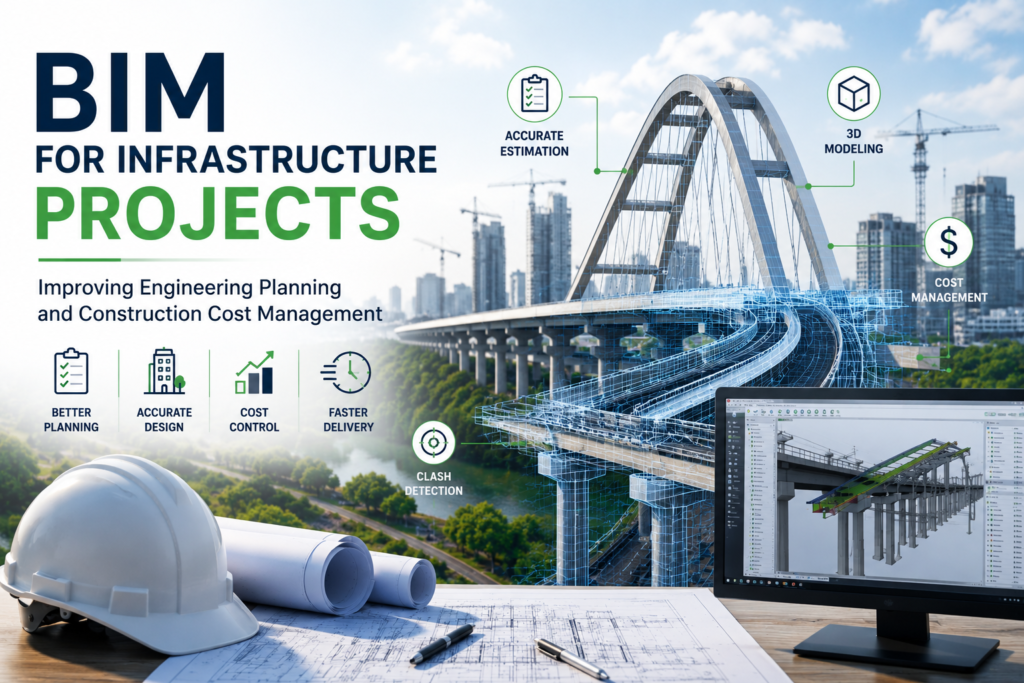
Infrastructure projects are becoming more complex than ever. From airports and highways to industrial facilities and smart cities, project teams face constant pressure to deliver on time and within budget. This is why BIM for infrastructure projects has become an essential tool for modern engineering and construction companies. By improving coordination, reducing design conflicts, and increasing project visibility, BIM helps organizations avoid costly delays and budget overruns.
The biggest reason behind these issues is not always poor effort or lack of expertise. In most cases, the real problem lies in outdated planning systems, disconnected workflows, and inefficient communication between teams. This is exactly why BIM for infrastructure projects has become one of the most important innovations in modern engineering and construction.
At Enclave Technology Services, we help organizations adopt smarter engineering workflows through advanced BIM, CAD, and digital engineering solutions. Our goal is simple — reduce project risks, improve coordination, and help infrastructure projects stay on budget and on schedule.
In this blog, we’ll explore:
- Why infrastructure projects exceed budgets
- The hidden costs companies often overlook
- How BIM for infrastructure projects improves coordination
- Why digital engineering is the future of infrastructure planning
- How Enclave Technology Services supports smarter project execution
Why Infrastructure Projects Frequently Go Over Budget
Infrastructure projects are highly complex. They involve multiple stakeholders, strict deadlines, technical coordination, procurement management, and regulatory compliance. Even small inefficiencies can create a ripple effect across the entire project lifecycle.
Poor Coordination Between Teams
One of the most common reasons projects exceed budgets is fragmented communication between stakeholders.
Traditional workflows often separate:
- Architects
- Structural engineers
- MEP consultants
- Contractors
- Project managers
- Vendors
When these teams work independently using different files and disconnected systems, coordination issues become unavoidable.
For example:
- HVAC systems clash with structural elements
- Plumbing layouts interfere with electrical systems
- Revised drawings fail to reach on-site teams
These errors lead to:
- Costly rework
- Material wastage
- Project delays
- Increased labor expenses
With BIM for infrastructure projects, all stakeholders work within a centralized digital model, improving collaboration and reducing conflicts before construction begins.
Inaccurate Quantity Estimation
Material estimation errors can severely impact infrastructure budgets.
Without intelligent digital models, quantity calculations are often done manually. As project revisions happen, tracking changes becomes difficult, leading to:
- Excess procurement
- Material shortages
- Logistics inefficiencies
- Budget leakages
Using BIM for infrastructure projects, teams can generate accurate quantity take-offs directly from the model. This improves procurement planning and helps organizations maintain better cost control.
Design Changes During Construction
Late-stage design revisions are one of the biggest financial burdens in construction projects.
Once execution begins:
- Labor is deployed
- Materials are ordered
- Timelines are locked
Any design modification at this stage can disrupt the entire workflow.
This is where BIM for infrastructure projects becomes essential. BIM allows teams to visualize and validate designs before construction begins, helping stakeholders identify issues early and avoid expensive corrections later.
Lack of Real-Time Project Visibility
Many companies still rely on:
- Spreadsheets
- Static drawings
- Email-based approvals
- Manual reporting systems
These outdated methods create information silos and reduce project transparency.
Project managers often struggle to track:
- Construction progress
- Resource allocation
- Cost variations
- Design approvals
By implementing BIM for infrastructure projects, organizations gain access to real-time project data, helping teams make faster and more informed decisions.
What Is BIM and Why Does It Matter?
Building Information Modeling (BIM) is much more than 3D visualization.
It is a collaborative digital process that integrates:
- Design
- Engineering
- Construction planning
- Cost estimation
- Scheduling
- Facility management
into one intelligent ecosystem.
Instead of relying on disconnected drawings, BIM creates a dynamic digital model where every component contains valuable data.
This enables:
- Better collaboration
- Clash detection
- Accurate cost forecasting
- Improved scheduling
- Smarter lifecycle management
Today, BIM for infrastructure projects is transforming how engineering firms, contractors, and developers plan and execute large-scale projects.

How BIM for Infrastructure Projects Reduces Budget Overruns
Early Clash Detection
One of the biggest advantages of BIM is clash detection.
Before construction begins, BIM software identifies:
- Structural clashes
- Mechanical conflicts
- Electrical routing issues
- Space coordination problems
Fixing these issues digitally is significantly more affordable than correcting them on-site.
At Enclave Technology Services, our BIM coordination workflows help clients detect potential issues early, reducing delays and avoiding unnecessary project expenses.
Better Cost Estimation
Accurate cost estimation is critical for infrastructure planning.
With BIM for infrastructure projects, teams can:
- Generate real-time quantity take-offs
- Improve procurement accuracy
- Reduce material wastage
- Forecast budgets more effectively
This level of precision helps organizations make smarter financial decisions throughout the project lifecycle.
Improved Collaboration
One of the key benefits of BIM is centralized communication.
All project stakeholders work on the same updated model, including:
- Architects
- Engineers
- Contractors
- Owners
- Consultants
This improves:
- Coordination
- Approval workflows
- Design consistency
- Decision-making speed
As a result, projects become more efficient and significantly less vulnerable to communication-related delays.
Smarter Scheduling with 4D BIM
Time delays are one of the leading causes of budget overruns.
4D BIM integrates scheduling data into project models, allowing teams to visualize:
- Construction sequencing
- Timeline dependencies
- Resource planning
- Execution stages
This proactive approach helps project managers identify bottlenecks before they impact deadlines.
Using BIM for infrastructure projects, organizations gain greater control over both time and cost management.
Better Lifecycle Management
Infrastructure projects are long-term assets that require ongoing maintenance and operational efficiency.
BIM supports lifecycle management by providing:
- Accurate asset data
- Facility maintenance information
- Future renovation insights
- Operational planning support
This makes BIM for infrastructure projects valuable not only during construction but throughout the entire lifecycle of the infrastructure asset.
Benefits of BIM for Infrastructure Projects
Organizations adopting BIM gain several long-term advantages:
Reduced Project Risks
BIM minimizes coordination errors and design conflicts.
Better Cost Control
Accurate estimation reduces unnecessary expenses.
Faster Project Delivery
Improved collaboration accelerates approvals and execution.
Improved Decision-Making
Real-time project visibility enables smarter planning.
Enhanced Sustainability
BIM improves resource utilization and reduces wastage.
Stronger Client Confidence
Transparent workflows create better stakeholder trust.
Why Choose Enclave Technology Services?
At Enclave Technology Services, we combine engineering expertise with advanced digital technologies to deliver smarter infrastructure planning solutions.
We understand that every infrastructure project comes with unique technical and operational challenges. That’s why our BIM workflows are tailored to your specific project requirements.
Our Engineering & BIM Services
BIM Modeling Services
Accurate and intelligent 3D BIM models for infrastructure and construction projects.
BIM Coordination Services
Clash detection and multidisciplinary coordination to improve project efficiency.
CAD Drafting Solutions
Precise engineering drafting and technical documentation services.
Structural Analysis Services
Advanced structural engineering support for safer project execution.
Digital Engineering Solutions
Technology-driven workflows that improve collaboration and project visibility.
Our Service Areas
Enclave Technology Services supports projects across:
- Airports and aviation infrastructure
- Commercial developments
- Industrial facilities
- Transportation infrastructure
- Residential developments
- Smart city projects
- Engineering consulting firms
- Construction management companies
Whether you are developing a new project or optimizing an existing one, our team helps you implement smarter digital engineering workflows.https://www.yenclave.com/services/
How We Work
Step 1: Project Consultation
We understand your project goals, timelines, and technical challenges.
Step 2: BIM Strategy Planning
Our experts create a customized BIM implementation strategy.
Step 3: Model Development
We develop intelligent BIM models tailored to your project requirements.
Step 4: Coordination & Review
Our team performs clash detection and quality reviews.
Step 5: Ongoing Support
We continue supporting your team throughout project execution.
Real Client Testimonials
“Exceptional BIM Coordination”
“Enclave Technology Services helped us identify major design clashes before execution. Their BIM expertise saved us significant time and cost.”
— Senior Project Manager, Commercial Infrastructure Firm
“Highly Professional Team”
“Their engineering and BIM coordination support improved project visibility and reduced delays. Communication was smooth throughout.”
— Director, Engineering Consultancy
“Smarter Planning and Better Execution”
“Working with Enclave helped us improve quantity estimation and project coordination. Their digital engineering approach added real value.”
— Infrastructure Development Client
Frequently Asked Questions
What is BIM for infrastructure projects?
BIM for infrastructure projects is a digital engineering process that improves planning, design coordination, scheduling, and cost management using intelligent 3D models and real-time collaboration tools.
How does BIM reduce project costs?
BIM helps reduce costs by minimizing design clashes, improving material estimation, reducing rework, and streamlining project coordination.
Is BIM suitable for large infrastructure developments?
Yes. BIM is widely used for airports, highways, industrial facilities, smart cities, transportation systems, and commercial infrastructure projects.
Can BIM be implemented during ongoing projects?
Absolutely. BIM can improve coordination and project visibility even during active construction phases.
Why choose Enclave Technology Services for BIM solutions?
Enclave Technology Services combines engineering expertise, digital workflows, and industry-focused BIM solutions to improve project efficiency and reduce infrastructure risks.
The Future of Infrastructure Belongs to Smarter Planning
Infrastructure projects do not fail because teams lack ambition. They fail because outdated systems create avoidable inefficiencies.
This is why BIM for infrastructure projects is becoming essential for modern engineering and construction companies.
BIM improves collaboration, enhances project visibility, reduces design conflicts, and helps organizations control budgets more effectively.
At Enclave Technology Services, we believe smarter infrastructure begins with smarter engineering workflows.
As infrastructure projects become larger and more complex, adopting BIM for infrastructure projects is no longer optional — it’s essential for long-term success.
Book a Free Virtual Consultation
Looking to improve project coordination and reduce infrastructure risks?
At Enclave Technology Services, we help organizations implement smarter BIM and digital engineering solutions tailored to modern infrastructure demands.
✅ Book a FREE virtual consultation with our expertshttps://www.yenclave.com/contact/
✅ Discover how digital engineering can transform your project delivery process
Contact Enclave Technology Services today and build smarter, faster, and more efficiently.