Greenhouse Gas Emissions in Construction: Causes, Effects & Engineering Solutions
| Table of Contents |
|---|
| What Are Greenhouse Gas Emissions? |
| Why Is the Construction Industry a Major Contributor? |
| Common Causes of Greenhouse Gas Emissions in Construction |
| What Are the Effects of Greenhouse Gas Emissions? |
| How Can the Construction Industry Reduce Greenhouse Gas Emissions? |
| Why Green Building Matters More Than Ever |
| Why Choose Enclave Technology Service? |
| Our Service Areas |
| How We Work |
| Frequently Asked Questions |
| Book Your Free Virtual Consultation |
Introduction
Greenhouse gas emissions in construction are one of the most serious environmental challenges the building industry faces today, and most people in the sector are only beginning to understand the scale of the problem.
The construction industry accounts for roughly 37 percent of global carbon dioxide emissions every year. That includes the energy used to make building materials, the fuel burned by machinery on site, and the energy consumed by buildings once they are in use. Together, these add up to a contribution to climate change that is simply too large to ignore.
The encouraging thing, however, is that engineers and designers now have real tools to tackle this problem. Better planning, smarter material choices, digital modelling, and thoughtful structural design can all significantly cut the carbon footprint of a construction project without adding cost or complexity.
At Enclave Technology, we believe that good engineering and responsible environmental practice go hand in hand. In this guide, we will walk through what causes greenhouse gas emissions in construction, why it matters, and the practical engineering solutions that are already making a difference on projects across India and the Middle East.
What Are Greenhouse Gas Emissions?
Before we talk about construction, let’s understand the basics.
Greenhouse gas emissions are gases released into the atmosphere that trap heat around the Earth. This natural process keeps our planet warm enough for people, animals, and plants to survive.
However, when too many of these gases are released, they begin to affect the Earth’s climate. Over time, higher greenhouse gas emissions can lead to rising temperatures, changing weather patterns, melting glaciers, and more frequent extreme weather events.
Some of the most common greenhouse gases include:
- Carbon dioxide (CO₂)
- Methane (CH₄)
- Nitrous oxide (N₂O)
- Fluorinated gases
These gases come from many everyday activities, including transportation, electricity generation, manufacturing, agriculture, and construction.
Why Is the Construction Industry a Major Contributor?
Construction shapes the world around us. From homes and hospitals to airports and commercial buildings, every project begins with planning, materials, and skilled engineering.
At the same time, construction is one of the world’s largest users of natural resources.
Think about everything that goes into a single building. Cement has to be manufactured, steel has to be produced, materials have to be transported, and heavy equipment is used throughout the project. Once the building is complete, it continues to consume energy for lighting, cooling, heating, and daily operations.
When all these stages are combined, greenhouse gas emissions increase significantly.
This doesn’t mean construction is the problem. Instead, it shows why the industry has such an important opportunity to become part of the solution.
Across the world, businesses are now investing in sustainable construction, energy-efficient buildings, and better engineering practices that reduce environmental impact while creating long-lasting infrastructure.
What Causes Greenhouse Gas Emissions in Construction?
To reduce emissions, we first need to understand where they come from. Construction-related carbon emissions generally fall into three categories, and each one requires a different approach to address.
1. Embodied Carbon in Building Materials
Embodied carbon refers to the greenhouse gases released during the production, transport, and installation of building materials. Steel and concrete are the two biggest contributors because of the enormous energy required to produce them.
Manufacturing one tonne of cement, for example, releases roughly 0.9 tonnes of carbon dioxide. When you consider how much concrete goes into a typical infrastructure or commercial project, the numbers add up very quickly.
Furthermore, the transport of materials from factory to site adds to this footprint, particularly on large projects where materials are sourced from distant suppliers.
2. Operational Carbon From Construction Activities
Construction sites consume significant amounts of fuel and electricity. Diesel-powered plant machinery, tower cranes, concrete mixers, generators, and temporary lighting all produce emissions throughout the build phase.
In India, where grid electricity still carries a significant carbon intensity, temporary site power is a notable contributor to a project’s overall emissions. Additionally, poor planning that leads to plant sitting idle or materials being moved unnecessarily adds carbon that serves no productive purpose.
3. Design Decisions That Lock In Lifetime Emissions
Perhaps the most significant but least visible source of construction-related emissions is the decisions made at the design stage. A building or structure that is over-engineered uses more material than it needs to. A building with poor thermal performance will consume more energy for decades. A project without proper coordination will result in rework, wasted materials, and additional site time.
Consequently, the design phase is where the greatest opportunity to reduce emissions lies. And it is where Enclave Technology focuses its efforts.
| CONSTRUCTION AND CLIMATE: KEY NUMBERS |
| 37% of global CO2 emissions come from the construction and buildings sector |
| 11% of total energy-related CO2 comes from building materials and construction processes alone |
| 50%+ of lifecycle carbon in a building can be locked in before construction even starts, through design decisions |
What Are the Effects of Greenhouse Gas Emissions?
The effects of greenhouse gas emissions are no longer something we only read about in reports. Many of us are already experiencing them in our daily lives.
Longer summers, unexpected floods, rising temperatures, and changing rainfall patterns have become more common across the world. While many factors contribute to these changes, increasing greenhouse gas emissions are one of the biggest reasons.
Here are some of the major effects:
Rising Global Temperatures
As more greenhouse gases build up in the atmosphere, they trap more heat. This causes the Earth’s average temperature to rise, leading to warmer climates across many regions.
More Extreme Weather
Heavy rainfall, stronger storms, droughts, and heatwaves are becoming more frequent. These events not only affect people but also delay construction projects and increase infrastructure costs.
Higher Energy Consumption
When temperatures rise, buildings require more cooling. This increases electricity use, operating costs, and, in many cases, even more greenhouse gas emissions.
Pressure on Natural Resources
Construction depends on materials, water, and energy. As climate conditions become more unpredictable, managing these resources becomes increasingly difficult.
How Can the Construction Industry Reduce Greenhouse Gas Emissions?
The good news is that reducing greenhouse gas emissions doesn’t always require major changes. Often, small improvements made during the planning and design stage can have a lasting impact.
Here are some practical ways the construction industry is making a difference.
Design Buildings That Use Less Energy
A well-designed building naturally consumes less energy throughout its life.
Simple decisions like allowing more natural daylight, improving insulation, or planning better ventilation can reduce the need for artificial lighting and air conditioning.
These choices benefit both the environment and the building owner by lowering long-term energy costs.
Choose Sustainable Building Materials
Today, many builders are using recycled steel, low-carbon concrete, responsibly sourced timber, and other eco-friendly materials.
These alternatives help reduce greenhouse gas emissions while maintaining the quality and durability expected from modern buildings.
Plan Before Construction Begins
One of the biggest reasons for material waste is poor planning.
When designs are carefully reviewed before construction starts, teams can avoid unnecessary changes, reduce waste, and make better use of available resources.
This not only saves time but also reduces emissions linked to extra manufacturing and transportation.
Build for the Future, Not Just Today
Sustainable buildings are designed to perform well for many years.
Energy-efficient lighting, better water management, and modern HVAC systems all contribute to lower operating costs while reducing environmental impact over the building’s lifetime.
Why Green Building Matters More Than Ever
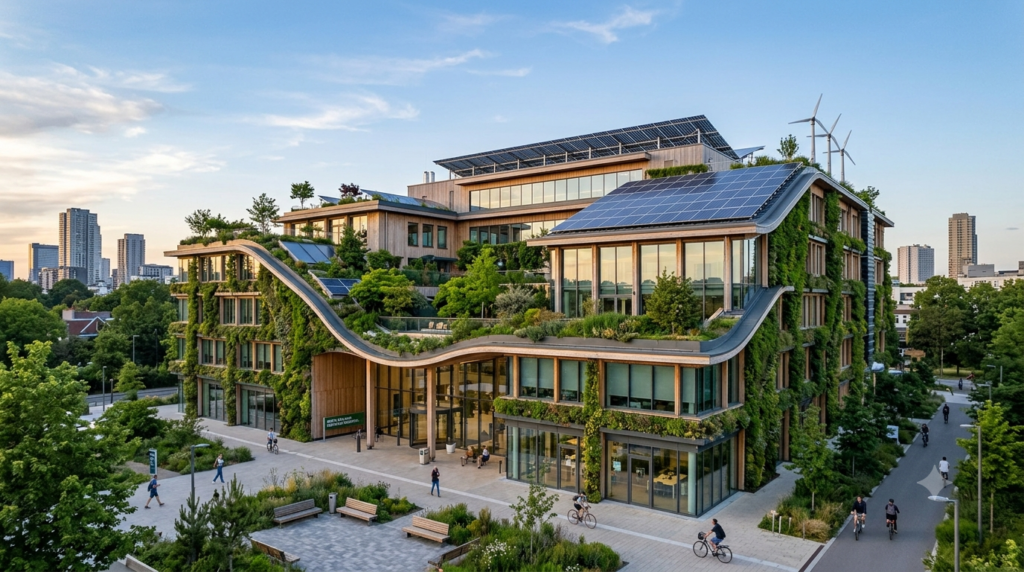
Green building is no longer just a trend. It has become a practical way to create healthier, more efficient spaces while reducing greenhouse gas emissions.
A green building focuses on using resources wisely throughout the entire life of a project—from design and construction to daily operation.
Some of the biggest benefits include:
- Lower energy consumption
- Reduced operating costs
- Better indoor comfort
- Improved resource efficiency
- Lower greenhouse gas emissions
- Greater long-term value
For businesses, green buildings are also a smart investment. Many organisations are choosing sustainable facilities because they help meet environmental goals while creating better workplaces for employees.
Why Choose Enclave Technology Service?
Creating sustainable buildings starts long before construction begins. It starts with thoughtful planning, accurate design, and experienced engineering.
At Enclave Technology Service, we work with businesses, developers, consultants, and project teams to deliver engineering solutions that support smarter and more sustainable construction.
Our expertise includes:
- Green Building Solutions
- BIM Modelling
- Architectural & MEP Revit Services
- Structural Engineering
- Tekla Structures
- ETABS & SAFE Modelling
- Engineering Design & Consultancy
Rather than offering one-size-fits-all solutions, we work closely with every client to understand project requirements and recommend practical engineering approaches that support efficiency, quality, and sustainability.
Our Service Areas
Enclave Technology Service supports projects across multiple industries, including:
- Commercial Buildings
- Residential Developments
- Industrial Facilities
- Educational Institutions
- Healthcare Infrastructure
- Renewable Energy Projects
- Sustainable Building Projects
- Engineering & Infrastructure Development
Whether it’s a new development or an existing facility, our goal is to deliver engineering solutions that help projects perform better today and well into the future.
How We Work
Our approach is simple and transparent.
Step 1 – Understand Your Project
We begin by learning about your goals, project requirements, and sustainability objectives.
Step 2 – Plan the Right Solution
Our engineering team develops practical design strategies based on your project’s needs.
Step 3 – Design and Coordinate
Using modern engineering tools and industry best practices, we create accurate models and coordinated designs that help reduce errors and improve efficiency.
Step 4 – Support Throughout the Project
From the early planning stage to project completion, our team stays involved to ensure smooth collaboration and timely delivery.
Frequently Asked Questions
What are greenhouse gas emissions?
Greenhouse gas emissions are gases released into the atmosphere that trap heat. While they naturally help keep the Earth warm, excessive emissions contribute to climate change.
Why does the construction industry produce greenhouse gas emissions?
Construction uses energy-intensive materials like cement and steel, heavy machinery, transportation, and electricity. Together, these activities increase greenhouse gas emissions.
How can green buildings reduce greenhouse gas emissions?
Green buildings use energy more efficiently, reduce waste, improve insulation, and make better use of natural resources. This helps lower greenhouse gas emissions throughout the building’s life.
Can engineering help reduce greenhouse gas emissions?
Yes. Better planning, sustainable design, efficient building systems, and modern engineering practices can significantly reduce emissions while improving building performance.
What is the role of BIM in sustainable construction?
Building Information Modelling (BIM) helps project teams plan more accurately, reduce material waste, improve coordination, and support sustainable construction practices.
Why is reducing greenhouse gas emissions important?
Lower greenhouse gas emissions help slow climate change, improve air quality, conserve resources, and create healthier communities for future generations.
Book Your Free Virtual Consultation
Every sustainable project starts with the right planning.
Whether you’re designing a commercial building, planning an industrial facility, or exploring green building solutions, the right engineering approach can make a lasting difference.
Enclave Technology Service is here to help you create smarter, more efficient, and future-ready projects.
👉 Book your FREE Virtual Consultation today and discover how our engineering expertise can support your next project.