How BIM Improves Coordination in Desalination and Water Treatment Plant Projects
Introduction
As the demand for clean water continues to grow, desalination and water treatment projects are becoming larger, more sophisticated and more technically demanding. Whether the goal is supplying potable water, supporting industrial processes or expanding municipal infrastructure, these facilities depend on precise engineering long before construction begins.
A modern desalination or water treatment plant is not made up of a single system. It combines structural components, process equipment, piping networks, electrical systems, instrumentation, utilities and access requirements within a limited space. Each discipline has its own design priorities, but every element must work together once construction starts.
This is where coordination becomes just as important as design.
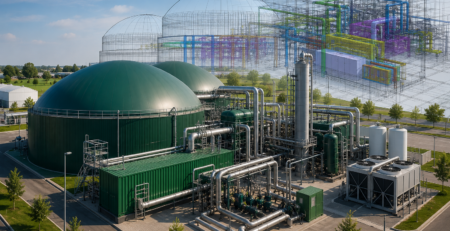
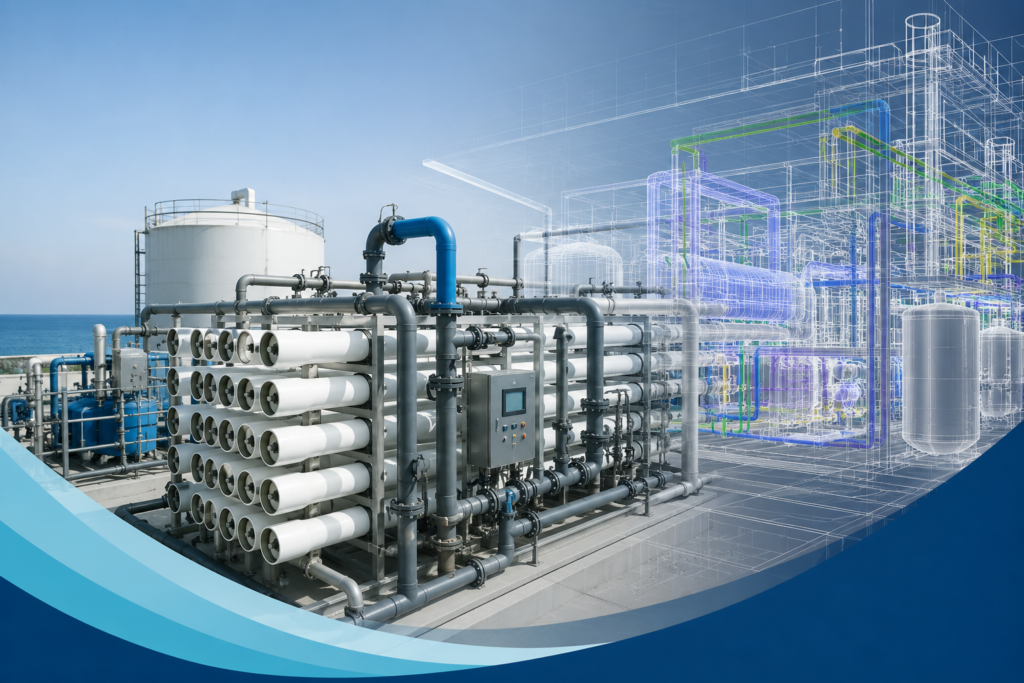
Building Information Modelling (BIM) enables engineering teams to review these systems together in a coordinated digital environment, helping identify potential conflicts before they become costly site issues. For complex infrastructure projects, this approach supports better planning, smoother execution and greater confidence throughout the project lifecycle.
Why Coordination Matters More Than Individual Designs
In many infrastructure projects, each engineering discipline develops its own drawings and design deliverables. Individually, these designs may be technically accurate and fully compliant.
The challenge begins when they are brought together.
A structural member may interfere with a pipeline. Equipment may limit maintenance access. Cable trays may occupy the same space as mechanical services. These issues are rarely obvious when reviewing drawings separately, but they can quickly become major obstacles during construction.
Resolving these conflicts on site often results in design revisions, project delays and additional costs.
Effective coordination helps reduce these risks by allowing engineering teams to review how every discipline interacts before construction begins.
Understanding the Complexity of Desalination and Water Treatment Plants
Water infrastructure projects involve far more than treatment equipment.
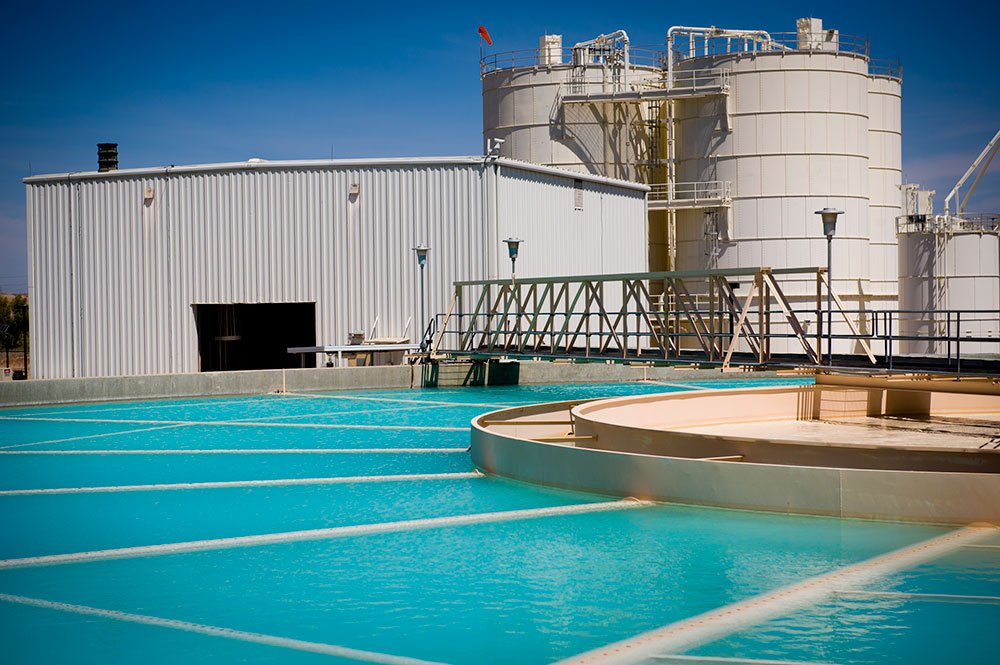
A typical facility may include intake structures, pumps, filtration systems, reverse osmosis units, chemical dosing systems, storage tanks, pipe racks, electrical rooms, utility corridors and maintenance platforms. Every component has specific spatial, operational and safety requirements.
In addition to technical performance, engineers must consider equipment accessibility, maintenance clearances, structural support, future expansion and construction sequencing.
Managing these requirements across multiple engineering disciplines requires a coordinated design process rather than isolated design reviews.
Where BIM Makes the Difference
BIM is often associated with 3D modelling, but its real value lies in improving collaboration between engineering disciplines.
Instead of reviewing separate drawings independently, project teams can visualise structural, mechanical, piping and electrical systems within a single coordinated model.
This provides greater visibility into the overall facility and helps teams make informed decisions before construction activities begin.
For desalination and water treatment plant projects, BIM supports better planning by giving engineers a clearer understanding of how different systems interact throughout the facility.
Early Clash Detection Reduces Site Challenges
One of the most practical advantages of BIM is clash detection.
As multiple engineering disciplines develop their designs, physical conflicts between systems can be identified within the digital model instead of on the construction site.
For example, engineers can detect if:
- A pipeline passes through a structural beam
- Equipment blocks maintenance access
- Cable trays interfere with mechanical systems
- Utility lines overlap with other services
- Platforms restrict operational movement
Identifying these issues during design allows project teams to resolve them before fabrication and installation begin.
This not only reduces rework but also helps maintain project schedules and improve coordination between stakeholders.
Improving Design Coordination Across Disciplines
Successful water infrastructure projects rely on continuous collaboration between different engineering teams.
Structural engineers need to understand equipment loading requirements. Mechanical teams must coordinate with piping layouts. Electrical systems should align with equipment locations, while civil works must support the overall facility layout.
BIM provides a shared environment where these interactions can be reviewed together rather than independently.
This coordinated approach helps improve communication, reduce misunderstandings and create a design that is more practical for construction.
It also gives project owners, consultants and EPC contractors greater confidence that engineering decisions have been reviewed collectively rather than in isolation.
Better Constructability Through Digital Engineering
A technically correct design is not always the easiest design to build.
Construction teams need sufficient access for installation, lifting operations, maintenance activities and future equipment replacement. These practical considerations can sometimes be overlooked when design disciplines work separately.
Digital engineering helps bridge this gap by allowing project teams to evaluate constructability before work begins on site.
By reviewing coordinated models, engineers can identify opportunities to optimise layouts, improve accessibility and simplify construction activities without affecting project performance.
For complex desalination and water treatment facilities, these improvements can contribute to a smoother transition from design to execution.
Supporting Better Project Decisions
Engineering coordination is not only about identifying clashes. It also helps project teams make better decisions throughout the design process.
When stakeholders can visualise the complete facility, discussions become more productive. Design alternatives can be reviewed with greater clarity, changes can be assessed earlier and project teams can understand how one modification may affect other systems.
This collaborative approach helps minimise uncertainty and creates a stronger foundation for project delivery.
As desalination and water treatment infrastructure continues to evolve, engineering teams are increasingly adopting digital workflows that support better coordination, improved constructability and more efficient project execution.
Engineering Support Beyond the Design Stage
Engineering coordination does not end once the design package is complete. As projects move into procurement and construction, new challenges often emerge. Equipment specifications may change, site conditions may differ from initial assumptions, or installation constraints may require design revisions.
Having an engineering team that can respond quickly with updated drawings and coordinated models helps maintain project continuity and reduces the impact of unexpected changes.
This ongoing support is particularly valuable for desalination and water treatment projects, where multiple contractors and engineering disciplines are working simultaneously.
The Role of CAD, VDC and Structural Engineering
Delivering a successful water infrastructure project requires more than coordinated 3D models. Detailed engineering documentation remains essential for fabrication, construction and project execution.
CAD services help develop accurate engineering drawings, while structural engineering ensures that buildings, platforms, pipe racks and equipment supports are designed to meet project requirements. Virtual Design and Construction (VDC) further strengthens coordination by enabling project teams to review construction sequences, improve planning and enhance communication between stakeholders.
Together, these engineering services create a more structured workflow from design through construction.
Why Engineering Coordination Matters for EPC Contractors
Engineering Procurement and Construction (EPC) contractors are responsible for delivering projects on time while managing cost, quality and safety. Design coordination plays a significant role in achieving these objectives.
When engineering disciplines work together in a coordinated environment, EPC teams can:
- Reduce design-related rework
- Improve collaboration between project stakeholders
- Minimise construction delays
- Improve project planning
- Enhance overall construction efficiency
For complex desalination and water treatment facilities, these benefits contribute to better project outcomes and a more predictable execution process.
Supporting Sustainable Water Infrastructure
As governments and industries invest in sustainable water infrastructure, engineering expectations continue to evolve. Projects are becoming larger, timelines are becoming tighter and the need for accurate digital engineering is increasing.
Whether developing a new desalination facility or expanding an existing water treatment plant, coordinated engineering helps improve project visibility before construction begins.
Digital workflows also support better decision-making by providing project teams with a clearer understanding of how different systems interact within the facility.
How Enclave Technology Services Supports Complex Infrastructure Projects
Successful infrastructure projects rely on accurate engineering, effective coordination and clear communication between disciplines.
Enclave Technology Services supports these requirements through engineering and digital design solutions, including BIM, CAD, VDC, structural engineering, detailing and multidisciplinary coordination.
By helping project teams visualise, coordinate and validate engineering information before construction, Enclave contributes to smoother project execution and better collaboration across stakeholders.
Whether supporting desalination plants, water treatment facilities or other industrial infrastructure projects, the focus remains on delivering coordinated engineering solutions that help reduce design conflicts and improve project efficiency.
Frequently Asked Questions
1. What is BIM in desalination and water treatment projects?
Building Information Modelling (BIM) is a digital engineering process that helps project teams coordinate structural, mechanical, electrical and piping systems within a shared 3D environment before construction begins.
2. Why is coordination important in water infrastructure projects?
Desalination and water treatment plants involve multiple engineering disciplines working within limited space. Effective coordination helps identify potential conflicts early, reducing rework, delays and construction challenges.
3. How does BIM improve project execution?
BIM improves project execution through better design coordination, clash detection, constructability reviews and enhanced collaboration between project stakeholders.
4. What engineering services support desalination and water treatment projects?
Projects typically benefit from BIM, CAD, VDC, structural engineering, detailing, multidisciplinary coordination and engineering documentation to support efficient project delivery.
5. How can Enclave Technology Services support water infrastructure projects?
Enclave Technology Services provides BIM, CAD, VDC, structural engineering, detailing and engineering coordination services that help improve collaboration, reduce design conflicts and support successful infrastructure project execution.
Conclusion
Modern desalination and water treatment plants involve far more than individual engineering disciplines working independently. The success of these facilities depends on how well every structural, mechanical, piping and utility system works together as a complete infrastructure.
BIM, CAD, VDC and coordinated engineering provide project teams with greater visibility during the design stage, helping identify potential challenges before they reach the construction site.
As water infrastructure projects continue to grow in scale and complexity, investing in better engineering coordination is becoming an essential part of successful project delivery.
Build Better Water Infrastructure with Enclave Technology Services
Planning a desalination or water treatment project?
Partner with Enclave Technology Services for engineering solutions that support better coordination, improved constructability and efficient project execution. From BIM and CAD to VDC, structural engineering and detailing, our team helps transform complex engineering requirements into coordinated project outcomes.
Connect with Enclave Technology Services to discuss how we can support your next infrastructure project.